Lead Generation
How to Build a Quiz That Matches Visitors With the Right Digital Product
Turn a confusing product lineup into a useful recommendation with a few well-chosen questions.
By Hubpage Editorial Team · November 14, 2026 · 6 min read
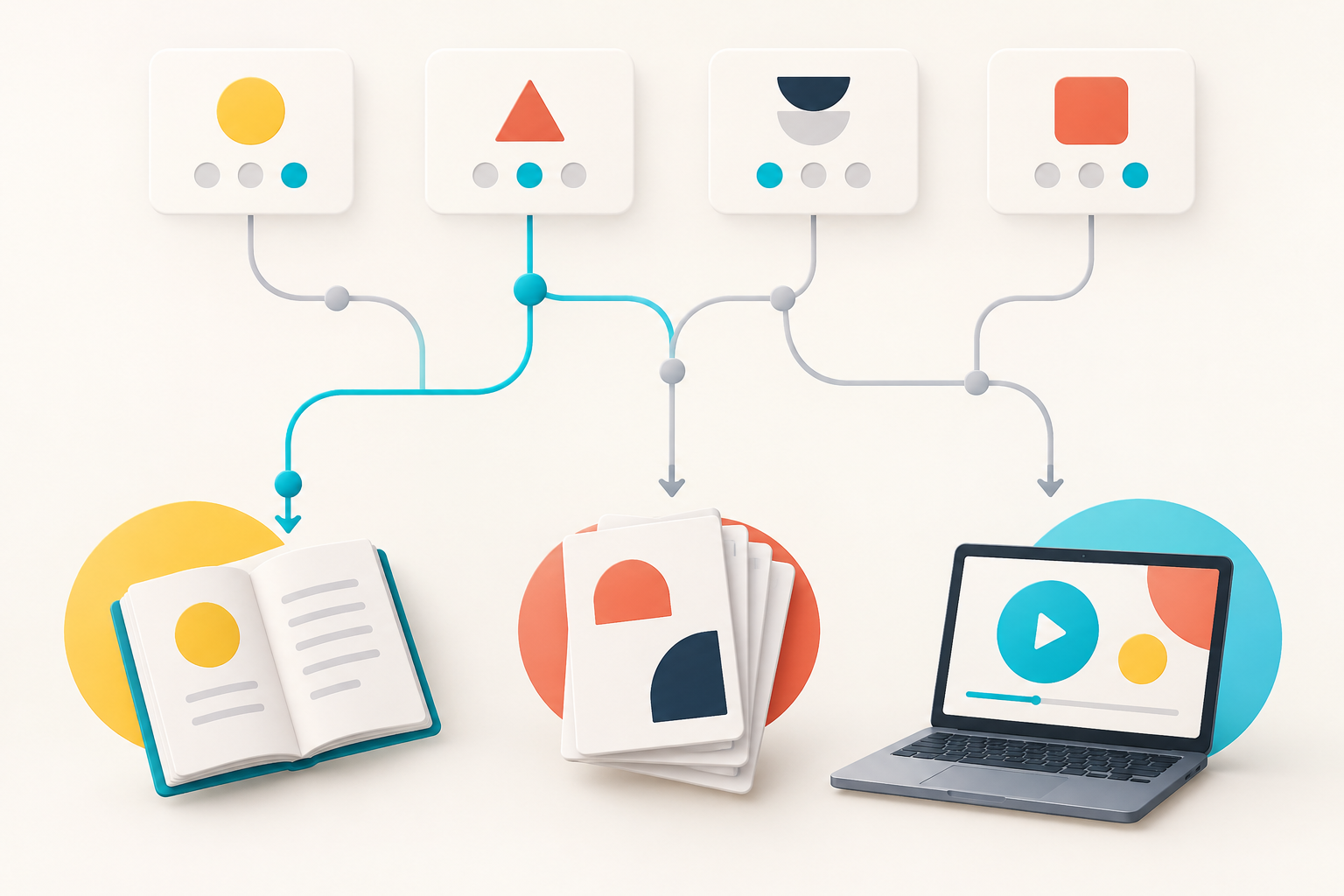
If you sell a template pack, a self-paced course, and a workshop, you probably understand exactly who each one is for. Your visitors may not. They see three options, overlapping promises, and a decision they aren't ready to make.
A product recommendation quiz can bridge that gap. It asks a few relevant questions, identifies the visitor's situation, and explains which option fits best.
The important word is explains. A quiz that always recommends your most expensive product is a sales pitch wearing a questionnaire. A useful quiz makes the buying decision easier—even when the right answer is a free resource or “not yet.”
Start with the decision, not the questions
Before opening a quiz builder, write down the decision you want to help someone make. Keep it narrow enough that you can reasonably guide it.
“What kind of entrepreneur are you?” might be entertaining, but it doesn't necessarily help someone choose a product. “Which resource will help you launch your first freelance service?” gives you a much clearer job.
For this walkthrough, imagine a creator offering three digital products:
- A $29 service-planning workbook: for people who haven't chosen a clear service yet.
- A $49 proposal template kit: for freelancers with a defined service who need help responding to prospects.
- A $199 client-acquisition course: for freelancers with a clear offer who need a repeatable way to find potential clients.
These are illustrative products and prices. What matters is that each solves a different problem. If you can't clearly distinguish your products, fix that before building the quiz.
Define the matching rules first
Create a small decision table before writing questions. For each product, record who it helps, what they need beforehand, and when you should avoid recommending it.
Describe a good fit and a bad fit
For the proposal kit, a good-fit visitor already knows what they sell and has prospects asking about their services. A poor-fit visitor is still deciding what business to start.
For the acquisition course, a good-fit visitor has a defined offer but struggles to reach potential clients. Someone without an offer needs foundational work first, regardless of their budget.
Add a fourth outcome: start with a free resource. This gives you an honest recommendation when someone isn't ready, can't afford a suitable product, or has a problem your catalog doesn't solve.
A useful test: could you explain each recommendation to a customer without mentioning your revenue goals? If not, revisit the matching rules.
Ask questions that change the recommendation
Every question should influence the result or help explain it. If removing a question wouldn't change anything useful, remove it.
For this example, start with four questions. That's a design choice, not a universal optimum; use enough questions to distinguish the outcomes without turning the quiz into an intake form.
1. What have you already figured out?
- I'm still choosing what service to offer.
- I know my service, but I haven't sold it yet.
- I've sold my service and want more consistent clients.
This establishes readiness. It also prevents you from recommending advanced acquisition work to someone who needs to define an offer first.
2. Where are you getting stuck?
- Turning my skills into a specific offer.
- Finding people who might need my service.
- Writing proposals when someone expresses interest.
- Something else.
This identifies the immediate problem. Include an escape route rather than forcing everyone into an answer that doesn't describe them.
3. Are potential clients asking for proposals?
- Yes, and preparing them is slowing me down.
- Occasionally, but writing them isn't the main issue.
- No, I need to find interested prospects first.
This question separates two situations that can look similar: needing more opportunities and struggling to respond to existing opportunities.
4. What can you comfortably spend on this right now?
- I need a free starting point.
- Up to $50.
- Up to $200.
Budget should constrain a recommendation, not manufacture one. Someone with $200 to spend may still need the $29 workbook. Someone who needs the course but has a $50 budget shouldn't receive an unrelated template recommendation.
Choose simple, explainable quiz logic
For a small catalog, explicit rules are often easier to maintain than a complicated scoring system. Start with prerequisites, then assess the problem, then apply budget constraints.
Our example could use this sequence:
- If the visitor selects “something else” as their main problem, offer a free resource directory without claiming a confident match.
- If they haven't chosen a service, recommend the workbook, provided it fits their budget.
- If they have a defined service, identify proposals as their main bottleneck, and receive proposal requests, recommend the template kit.
- If they have a defined service and identify finding prospects as their main bottleneck, recommend the acquisition course, provided it fits their budget.
- If answers conflict or no paid option fits, show a free starting point and explain the limitation.
If you use points instead, give stronger weight to readiness and the main problem than to secondary preferences. Set tie-breaking rules in advance. Don't let the most expensive product win by default.
Check your tool before implementing this logic. Quiz tools vary in support for branching, weighted scoring, conditional results, and analytics. Hubpage supports interactive quizzes and polls, but you should verify the specific matching behavior you need rather than assume every quiz feature is available.
Write results that justify the match
A result page needs more than a product image and a buy button. It should connect the recommendation to the visitor's answers.
Use this structure:
- The recommendation: name one primary next step.
- Why it fits: reference the relevant answers.
- What it helps with: describe the concrete task.
- What it doesn't solve: set a useful boundary.
- The next action: link to details, a preview, or a free resource.
For example: “The proposal template kit looks like your best next step. You already have a defined service, and interested prospects are asking for proposals. This kit gives you a starting structure for scope, deliverables, and pricing. It won't help you find new prospects, so choose it if proposal preparation is the bottleneck you want to address.”
Show the price before asking for another click. For layout ideas, browse these link-in-bio examples, paying attention to how clearly a page presents one primary action.
Make email signup useful, not compulsory
A quiz can support lead generation without hiding the result behind an email form. Show the recommendation first, then offer a relevant reason to subscribe.
For instance: “Want more practical resources on choosing and packaging your freelance service?” is appropriate if that's what your audience signup actually provides. Don't promise an emailed result or automated follow-up unless you have the tools and workflow to deliver it.
Keep marketing signup optional and explain what subscribers should expect. Only collect information you need. If quiz answers are stored alongside contact details, explain that use in your privacy information.
Hubpage can bring links, audience signup, and interactive content onto one page. You can explore Hubpage for professionals for that lead-capture context. Keep checkout on your existing selling platform: Hubpage does not currently provide product selling, email campaigns, or CRM automation.
Test the recommendations before sending traffic
Walk through realistic answer combinations manually. Include an unsure beginner, an experienced freelancer with proposal requests, someone with no budget, and someone whose problem falls outside your catalog.
For each path, check:
- Does the recommendation respect prerequisites and budget?
- Does the explanation accurately reflect the answers?
- Are conflicting answers handled honestly?
- Does the result link work on mobile?
- Can someone get useful guidance without subscribing?
Once published, measure quiz starts, completions, result-link clicks, and optional signups where your tools allow. Treat purchases as attributable only when you have a reliable way to connect them. A result click isn't a sale.
Ask early users one simple question: “Did this recommendation fit your situation?” Their explanations can reveal missing answer choices or unclear product positioning. Improve the weakest decision point first. The goal isn't a clever quiz; it's a recommendation you'd feel comfortable making in a real conversation.